Specialty Services · Water Treatment
Water Filtration and Treatment
Hard water spots, chlorine taste, orange stains or a rotten-egg smell? We test your water first, then install the softener, filter or reverse osmosis system it actually needs.
- Upfront quote before work starts
- Water tested first
- City water & wells
- Residential & commercial
Water Treatment Line
Not sure what your water needs?
(888) 206-2089
Tap to call- Water softeners
- Reverse osmosis drinking water
- Whole-house and well systems
What Water Filtration and Treatment Covers
Water can meet drinking-water standards and still cause everyday problems. Hard water leaves white spots on dishes, crust on shower heads and scale inside water heaters. Chlorine or chloramine, used by utilities to disinfect water, can make tap water taste and smell like a swimming pool. Well water can carry iron that stains sinks orange, manganese that leaves black marks, sediment that clouds the glass or sulfur that smells like rotten eggs. And acidic water can slowly corrode copper pipes, leaving blue-green stains.
Each of those problems has a different fix, and no single filter handles them all. A softener removes hardness minerals. Activated or catalytic carbon reduces chlorine taste and odor. Iron and sulfur filters oxidize and trap those contaminants. A neutralizer raises low pH. Sediment filters catch grit. Reverse osmosis reduces many dissolved solids for drinking water at one tap.
Water filtration and treatment from Green Plumbing starts with a test, so you only pay for what your water needs. We install equipment with bypass valves for easy service, connect drains properly and retest the water afterward to confirm the improvement.
Follow boil-water notices. A home filter or softener is not a substitute for safe supply water. Well owners should stop drinking water that suddenly changes color, taste or smell, or that was affected by flooding, until a certified lab has tested it. For health-related contaminants such as bacteria, nitrate or lead, rely on a certified lab test and its guidance.
Signs Your Water Needs Treatment
- White spots on dishes and glass shower doors
- Scale on faucets, shower heads and kettles
- Chlorine taste or smell from the tap
- Orange, black or blue-green stains on fixtures or laundry
- A rotten-egg smell from the water
- Cloudy or gritty water
- Dry skin and soap that won't lather
- A softener or filter that stopped working
Systems we install
Water Treatment Solutions
Water Softeners
Sized to your hardness and water use to reduce scale, spots and buildup in appliances.
Reverse Osmosis
Under-sink drinking water systems with a dedicated faucet and an optional ice-maker connection.
Whole-House Filters
Carbon and sediment filtration at the main line, so every tap and shower benefits.
Iron and Sulfur Filters
Treatment for staining and rotten-egg odor, chosen from your test results.
Well Water Systems
Multi-stage setups for private wells, including neutralizers and UV where testing calls for it.
Service and Filter Changes
Softener repair, filter and membrane changes and maintenance schedules.
Our Water Filtration and Treatment Process
- Test the water. We check hardness, iron, pH and chlorine on site and review any lab or utility reports.
- Recommend the right system. We explain what the results mean and suggest only what your water needs.
- Give an upfront quote. You know the price before we begin, including ongoing filter costs.
- Install the equipment. We add bypass valves, connect drains and program softeners for your water.
- Retest the water. We confirm the improvement and show you how the system works.
- Plan maintenance. We set a schedule for salt, filters and membranes.
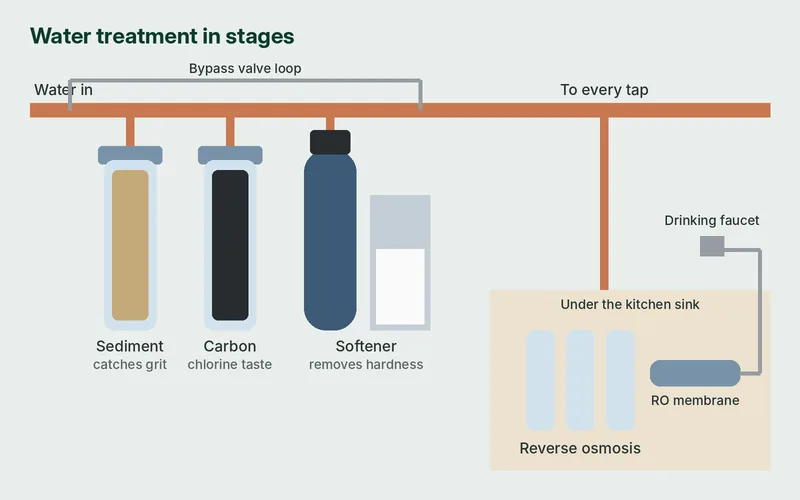
Treatment in stages
Sediment filters come first to protect everything after them. Carbon reduces chlorine, the softener removes hardness, and reverse osmosis polishes drinking water at the kitchen sink.
Whole-House or Point-of-Use?
- Whole-house (point-of-entry) systems treat all the water entering the home. Use them for hardness, iron, sediment and chlorine you notice in the shower.
- Point-of-use systems, like under-sink reverse osmosis, treat water at one tap. Use them for drinking and cooking water.
- Both work well together: a softener and whole-house filter for the house, plus RO at the kitchen sink.
Residential and Commercial Water Treatment
For homeowners, most calls start with hard water, a taste or smell complaint, or well water that stains. We also help landlords and property managers with softener service and filter changes across rental units.
Restaurants, cafés and offices often want filtered water for drinking, coffee and ice machines, and softened water to protect equipment from scale. We install and service commercial filtration and softening systems.
Honest, Upfront Pricing
We don't publish one-size-fits-all prices because water treatment depends on your water, your home and the equipment you choose. We test first, explain what we found and give you a clear quote, including ongoing costs, before any work begins.
How to Keep Your System Working
- Check softener salt monthly and break up any salt bridges.
- Change sediment and carbon filters on schedule.
- Replace RO filters and membranes as recommended.
- Test well water at least once a year with a certified lab.
- Retest after flooding, well work or any change in taste, smell or color.
- Keep equipment in a space that won't freeze.
For more tips, visit the Green Plumbing blog or our plumbing FAQ.
Service areas
Find Water Filtration and Treatment in Your City
Choose your city for local water filtration and treatment information, service-area details and answers to common questions.
Alaska
Arizona
Arkansas
California
Colorado
Delaware
Florida
Georgia
Hawaii
Illinois
Indiana
Kentucky
Louisiana
Maine
Massachusetts
Michigan
Minnesota
Montana
Nebraska
New Jersey
New York
North Carolina
Ohio
Oregon
Pennsylvania
Rhode Island
Tennessee
Texas
Washington
West Virginia
Wisconsin
FAQ
Water Filtration and Treatment Questions
How much does water filtration and treatment cost?
It depends on what your water needs, the equipment you choose, your home's size and water use, and the installation details. An under-sink reverse osmosis system is a smaller job than a multi-stage well treatment setup. We test first and give you an upfront quote, including ongoing filter costs, before any work begins. Call (888) 206-2089 to book.
Do I need a water softener or a water filter?
They solve different problems. A softener removes the calcium and magnesium that cause hard-water scale. Filters reduce things like chlorine taste, sediment, iron or sulfur odor. Many homes benefit from both. A water test tells us which ones your water actually needs.
Do you test the water before recommending a system?
Yes. We test on site for common issues such as hardness, iron, pH and chlorine. For health-related contaminants such as bacteria, nitrate or lead, we recommend a certified laboratory. City water customers can also check their utility's annual water quality report.
What does a reverse osmosis system do?
Reverse osmosis pushes water through a very fine membrane to reduce many dissolved solids, usually supplying a dedicated faucet at the kitchen sink. Many people prefer it for drinking and cooking. We install the system and the faucet, and can connect it to a refrigerator ice maker. See our faucet installation service for faucet options.
Will a softener protect my water heater?
Reducing hardness reduces the scale that builds up inside tank and tankless heaters, which helps them run efficiently. If scale has already caused problems, our water heater repair team can flush, repair or replace the heater.
How do I treat well water?
Start with a certified lab test. Wells often need more than one stage, such as sediment filtration, then iron or sulfur removal, then softening, and sometimes UV disinfection if testing shows bacteria. We design and install the system based on the results and recommend retesting at least once a year.
How often do filters need to be changed?
It depends on the system and how much water you use. Many sediment and carbon cartridges need changing every few months, while RO membranes last longer. Softeners need salt checked regularly. We set up a maintenance schedule and service most common brands.
Why is my water discolored or low on pressure?
Iron, manganese or sediment can discolor water, and a clogged filter can cut pressure. A failing or corroded service line can do both. We check the treatment equipment first, and if the line is the problem, our water line repair team can help. For a burst pipe, our emergency plumbers are available day or night.
What Customers Say About Our Water Filtration & Treatment Service
Had a great experience with Green Plumbing? We'd be grateful if you shared it. Your review helps neighbors find a plumber they can trust when it matters most.
Call (888) 206-2089 any time — and ask your technician how to leave a review.
Need a plumber right now?
Talk to a real person at Green Plumbing, day or night. We'll give you clear next steps on the phone and send a licensed plumber your way.