Drains & Sewer · Septic Service
Septic Tank Cleaning and Pumping
Slow drains, sewage odors or a tank that's overdue? Our crews pump and clean septic tanks completely, check baffles and filters, and tell you exactly what they found, so your drain field stays healthy.
- Upfront quote before work starts
- Complete tank pumping
- Filter & baffle checks
- Residential & commercial
Septic Service Line
Septic tank full or backing up?
(888) 206-2089
Tap to call- Routine septic tank pumping
- Riser installation and lid locating
- Backups handled day or night
Why Septic Tank Cleaning and Pumping Matters
If your home isn't connected to a city sewer, a septic system treats all of your household wastewater on site. Everything you flush or drain flows into the septic tank, where heavy solids settle to the bottom as sludge and grease and lighter material float to the top as scum. Bacteria break down part of that material, but not all of it. The liquid in the middle flows out to the drain field, where the soil finishes the job.
Over time, sludge and scum take up more and more of the tank. If the tank isn't pumped, solids start flowing out with the liquid and clog the drain field. That's the most expensive part of a septic system to repair or replace. Regular septic tank cleaning and pumping removes those solids before they cause damage and is the single most effective thing you can do to keep a septic system working for decades.
When we pump a tank, we remove the liquid together with the settled sludge and floating scum, check the inlet and outlet baffles, clean the effluent filter if there is one and look for signs of trouble in the tank or drain field.
Safety: never enter or lean into a septic tank; the gases inside can be deadly. Keep children and pets away from open lids. If you smell natural gas rather than sewage, leave the home and call your gas utility or 911 first.
Signs Your Septic Tank Needs Pumping
- Slow drains in sinks, tubs and toilets throughout the house
- Gurgling sounds from drains or toilets
- Sewage odors inside or near the tank and drain field
- Standing water or soggy ground over the drain field
- Grass that is unusually green and lush over the field
- Sewage backing up into the lowest drain or shower
- A septic alarm sounding on pump or aerobic systems
- It has been several years since the last pumping
Don't wait for a backup. Scheduling pumping before symptoms appear protects your drain field and avoids an unpleasant cleanup.
Septic services
What Our Septic Tank Service Includes
Complete Tank Pumping
We break up the sludge and scum and pump the tank completely, so it truly has room to work again.
Effluent Filter Cleaning
Outlet filters keep solids out of the drain field. We clean them during pumping and can recommend adding one if your tank doesn't have it.
Baffle and Tank Checks
We inspect inlet and outlet baffles and the tank itself for cracks, damage or signs of trouble.
Septic Backups
When sewage backs up, we pump the tank and check whether the line from the house needs clearing or the drain field is struggling.
Risers and Lid Locating
We find buried tanks and install risers so future pumping is faster, cleaner and easier on your yard.
Inspections
Buying or selling a home with septic? We pump and inspect the tank and explain its condition in plain language.
Our Septic Tank Pumping Process
- Locate the tank. We find the tank and uncover the lids, or use your risers if you have them.
- Give an upfront quote. You know the price before we start, including any digging or extra services.
- Pump completely. We break up sludge and scum and pump out all layers of the tank.
- Clean and check. We clean the effluent filter and inspect the baffles and tank condition.
- Look for warning signs. We note anything that suggests trouble with the line or drain field.
- Close up and report. We secure the lids, tidy the area and give you a recommended pumping schedule.
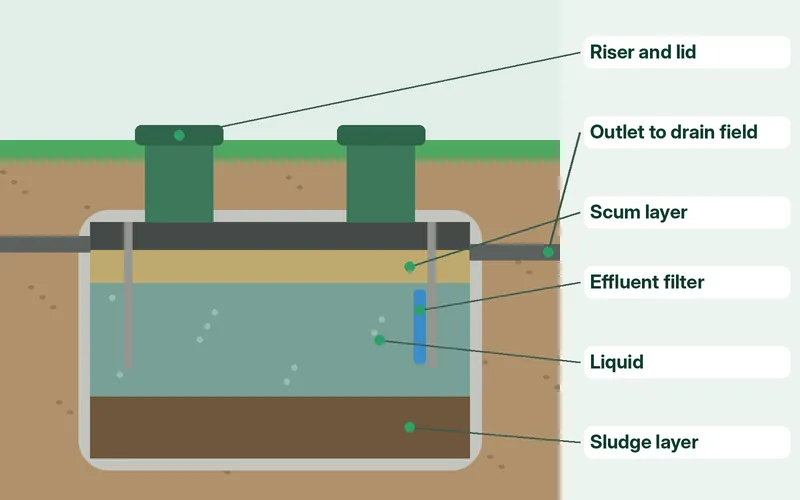
Inside a septic tank
Solids settle to the bottom as sludge, while grease and light material float as scum. Baffles keep both inside the tank, and an effluent filter catches small solids before the liquid flows to the drain field.
Pumping, Repair or Replacement?
- Pumping is enough when the tank is simply full and the baffles, filter and drain field are in good shape.
- Small repairs make sense for damaged baffles, broken lids, clogged filters or a blocked line between the house and tank.
- Drain field attention may be needed if wet spots, odors or slow drains continue after pumping.
- Line repair may be needed if roots or damage are blocking the pipe to the tank; our sewer line repair team can help.
We will always tell you what we see and what we recommend, and you decide what to do.
Residential and Commercial Septic Service
Most homeowners need septic tank pumping every few years, and we help you stay on schedule. We also serve landlords and property managers with multiple systems, as well as rental and vacation properties whose occupancy varies.
Restaurants, churches, offices, farms and other businesses on septic often need more frequent pumping. We help set a schedule based on actual use and can work around your hours.
Honest, Upfront Pricing
Septic service costs depend on tank size, how full the tank is, how easy it is to reach and whether extra services are needed. We don't publish one-size-fits-all prices; we give you a clear quote before any work begins.
How to Care for Your Septic System
- Pump the tank on schedule and keep a record of each service.
- Flush only toilet paper; keep wipes, hygiene products and grease out.
- Limit garbage disposal use, which adds solids to the tank.
- Spread laundry and dishwasher loads through the week.
- Fix running toilets and leaks quickly to avoid flooding the system.
- Keep vehicles, structures and trees off and away from the drain field.
- Direct gutters and downspouts away from the drain field.
For more tips, visit the Green Plumbing blog or our plumbing FAQ.
Service areas
Find Septic Tank Cleaning and Pumping in Your City
Choose your city for local septic information, service-area details and answers to common questions.
Alaska
Arizona
Arkansas
California
Colorado
Delaware
Florida
Georgia
Hawaii
Illinois
Indiana
Kentucky
Louisiana
Maine
Massachusetts
Michigan
Minnesota
Montana
Nebraska
New Jersey
New York
North Carolina
Ohio
Oregon
Pennsylvania
Rhode Island
Tennessee
Texas
Washington
West Virginia
Wisconsin
FAQ
Septic Tank Cleaning and Pumping Questions
How much does septic tank pumping cost?
It depends on the size of the tank, how much sludge has built up, how easy the lids are to reach and whether you need extras such as effluent filter cleaning, lid locating or riser installation. We give you an upfront quote before any work begins. Call (888) 206-2089 to book.
How often should a septic tank be pumped?
Many household tanks need pumping every three to five years. The right interval depends on tank size, the number of people in the home and how much water you use. A small tank, a large family or heavy garbage disposal use can mean more frequent pumping, and aerobic systems often need more regular service.
What are the signs my septic tank is full?
Slow drains throughout the house, gurgling, sewage odors, standing water or unusually green grass over the drain field and sewage backing up into the lowest drain are the most common signs.
Is septic pumping the same as septic cleaning?
The terms are often used interchangeably. A proper job removes the liquid along with the settled sludge and floating scum, rather than skimming off only the liquid. We also check the baffles and clean the effluent filter if your tank has one.
Do septic additives replace pumping?
No. A healthy septic tank already contains the bacteria it needs. Solids still build up over time and must be pumped out on schedule; additives do not remove them.
What should I do if my septic system is backing up?
Stop using water right away and keep people and pets away from any sewage. Call (888) 206-2089. We will pump the tank and check whether the problem is the tank, the line from the house, which may need drain cleaning, or the drain field.
What if I don't know where my septic tank is?
We can locate it using property records, probing and line tracing from the house. Once we find it, we can install risers so the lids are at ground level for easy access next time.
Do you service commercial septic systems?
Yes. We pump and service septic tanks for restaurants, offices, churches, farms, rental properties and other commercial sites, and we can set up a pumping schedule based on your use.
What Customers Say About Our Septic Pumping, Repair, Cleaning & Installation Service
Had a great experience with Green Plumbing? We'd be grateful if you shared it. Your review helps neighbors find a plumber they can trust when it matters most.
Call (888) 206-2089 any time — and ask your technician how to leave a review.
Need a plumber right now?
Talk to a real person at Green Plumbing, day or night. We'll give you clear next steps on the phone and send a licensed plumber your way.